Introduction
Malabar Headland is an area of national significance for its natural and cultural values:
- The most diverse and highest quality area of coastal bushland in the Sydney region supporting over 400 endemic native plant species and more than 200 bird species.
- Home to the Eastern Suburbs Banksia Scrub, an endangered plant community recognised under both Commonwealth and State legislation as “critically endangered”.
- Aboriginal sites: “Boora” in the name “Boora Point” means “gathering place”.
- World War II defence sites including the Watch Tower, 2 gun emplacements and a railway cutting.
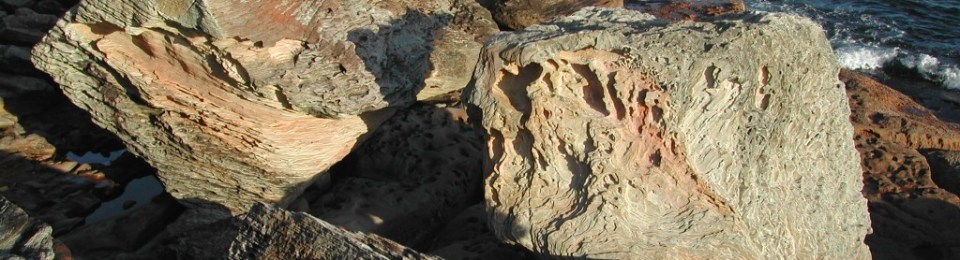
- A beautiful ocean setting with spectacular views of the coastline, dramatic sandstone cliffs, and stunning coastal bushland.
Location
The location of Malabar Headland on Sydney’s Eastern Suburbs coastline is shown in this map:

Current and Future Status of the Headland
All of Malabar Headland was previously owned by the Commonwealth of Australia. In December 2012 the Western Bushland section of ~18ha was handed to the NSW Government for the creation of Malabar Headland National Park (Western Section). In March 2016 the Eastern Bushland section of ~70ha was also handed over to become the Eastern Section of Malabar Headland National Park.
Randwick City Council constructed a boardwalk in the Western Section, and the State Government of NSW created a boardwalk in the Eastern Section, since upgraded to be wheelchair-accessible as far as Magic Point.
The NSW National Parks & Wildlife service website has further details on Malabar Headland National Park here.
The Shooters have a 50 year lease over the central part of the Headland, Anzac Rifle Range. Shooting on Malabar Headland has a long history dating back to the 1850s. The presence of the shooters has protected Malabar Headland from development, and has protected the bush to the west and the east of the Rifle Range. In the 1970s-1980s, most of the Rifle Range area was used as a landfill dump. On the northern side, adjacent to the southern end of Maroubra beach, the landfill is about 10m deep. Remediation to date includes the construction of leachate capture trenches on both the northern and southern sides of the Rifle Range, but little surface remediation of the top of the landfill has been done.
Find out More about the Headland
An excellent resource containing a wealth of descriptive material, and a vision for the future of the Headland, prepared for the local and wider community by Friends of Malabar Headland and published in August 2002 – Proposal for Boora National Park on Malabar Headland – Draft Community Plan of Management (FoMH, 2002). [version without maps]
A list of birds seen in the Maroubra Beach and Malabar Headland area from 1998 to 2003, with some observations from previous years; prepared by Rod Gardner (formerly of UNSW) – Birds of Maroubra Beach and the Malabar Headland.
The Future of the Headland
With the establishment of the Malabar Headland National Park encompassing the Eastern and Western Bushland, our vision (as outlined in our Draft Community Plan of Management above) for the Headland is being fulfilled. Much of the natural and cultural heritage is now protected. The hard work of FoMH and many other volunteers has paid off: Weeding began with a handful of locals in 1986; FoMH was formed in 2000, to advocate for protection of the bush and cultural remains. Clearing of the final infestations of Bitou, Lantana and Pampas grass was achieved by about 2003; since then natural regeneration of plants has occurred, and FoMH bush care volunteers keep up a weekly routine of follow-up weeding.
However, the Rifle Range, comprising half of the total Headland area, is not totally safe from development. A study in 2014 concluded that >2200 units, shops and offices could be built on the Rifle Range, around the area of the NSWRA headquarters, Jamieson House. This was followed in March 2015 by a declaration by the then Minister for the Environment, Greg Hunt, that Malabar Headland would never be developed.
After a court case, won by the shooters, a 50-year lease has granted to the NSWRA by the Commonwealth, although the parties are still working to relocate the shooters to another comparable shooting range, within the Sydney basin, at some time in the future. What will happen when or if the NSWRA is relocated?
We have established a new section on this website to discuss the future of the Headland. See the Future of the Headland tab at the top of this page. We welcome comments from the community.
 Friends of Malabar Headland